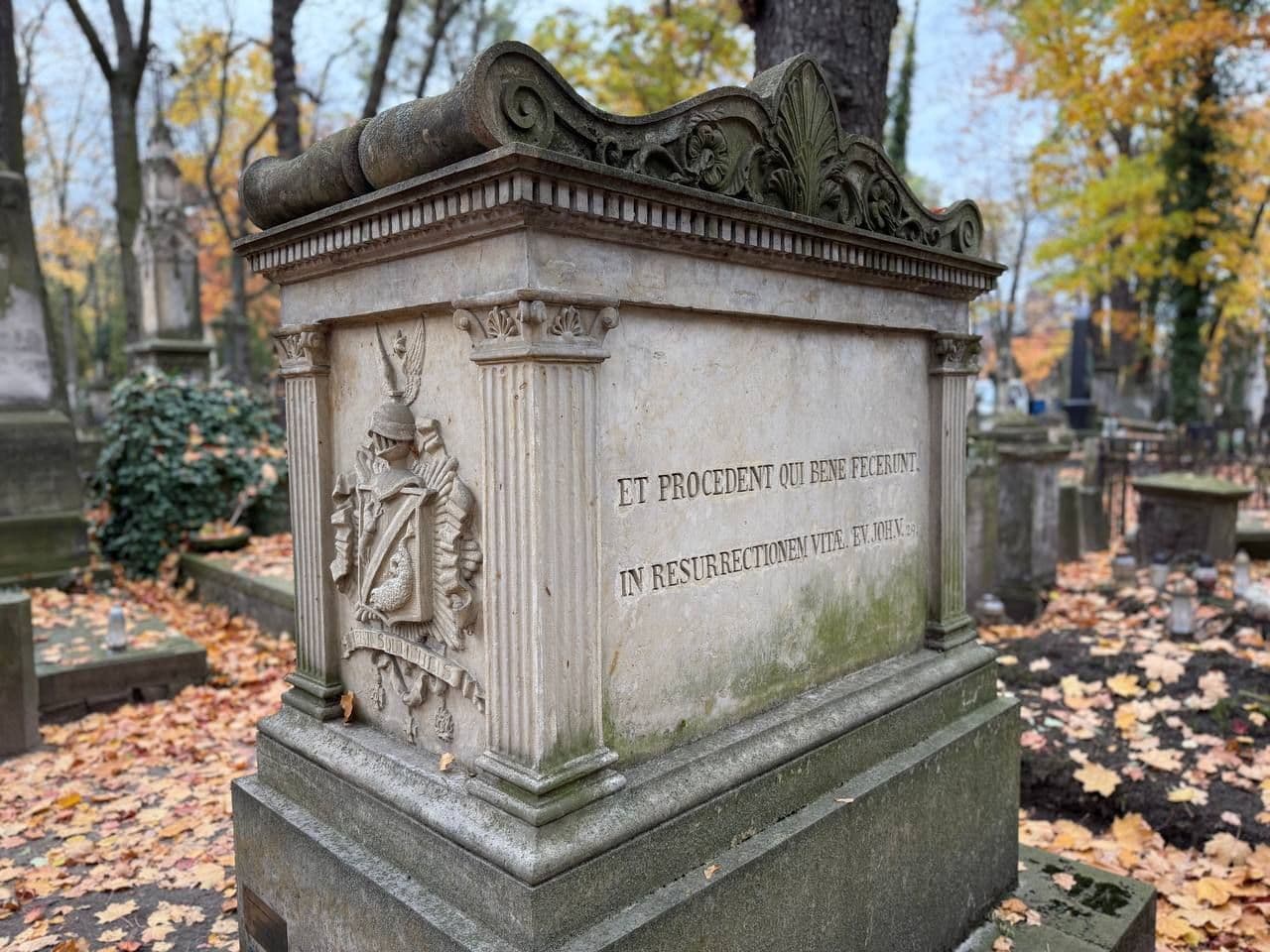

He was born in Dukla. At the age of 18, he went to Austria to begin studying engineering. After completing his studies, he served briefly in the Austrian army, then became a civil engineer in 1812, specialising in road construction, and was appointed deputy director of the Directorate for the Construction of Roads and Bridges in Galicia. Many roads were being built there at the time, giving him the opportunity to gain practical experience. In 1819, he moved to Warsaw, where he was appointed Director of the General Directorate of Roads and Bridges with the rank of general.
"At that time, apart from a suburban promenade from Warsaw to Bielany, there were no paved roads in the country. Nor was there any technical staff, not even teachers in this field. The work relied largely on corvée labour (compulsory public works imposed on the inhabitants of former villages and towns), based on customary law and affecting people living within three miles of a road. After 23 years of their work in the Kingdom of Poland, there were already 2,000 km of paved roads, and the road service had more than 800 qualified technical workers."
Christiani introduced many innovations, not only at the technical level but also in terms of organisation, such as building roadside inns where horses could be changed and travellers could rest. Some of Christiani's solutions have survived to this day. One example is the signs bearing the names of towns, placed at their entrances. Other innovations introduced at the time in the Kingdom of Poland included milestone markers and guardrails to prevent vehicles from leaving the road in more dangerous places.
Christiani also initiated the creation of a monument commemorating the construction of the Brest Road, featuring realistic scenes of the work involved in building this road, which was considered one of the most modern in Europe at the time. The monument can still be admired on Grochowska Street.
Christiani was involved not only in building roads, but also in sharing professional knowledge and training new staff. Among Christiani's publications are Guidelines for Preparing and Reviewing Estimates for the Construction of Paved Roads, Embankments, Bridges, etc., and Introductory Practical Instruction for Road Surveyors on the General System of Construction and Instructions for Road Engineering in the Kingdom of Poland, with a Lithographed Plan and Scale of Works by the General Directorate of Roads and Bridges.
His commitment to sharing knowledge was also reflected in his efforts to establish technical schools. He was a member of the Polytechnic Council (which was tasked, among other things, with developing a concept for a Polytechnic Institute). He was a member of the Scientific Society in Kraków and the Scientific Society of the University and Medical-Surgical Academy in Vilnius.
In addition to building roads, he redeveloped and shaped the village of Orońsko according to his own ideas. He was first its leaseholder and later its owner. He moved the settlement to higher ground, improved its roads and built water intakes (the coat of arms of the Orońsko municipality is Christiani's coat of arms—Jarosław). His contributions to the development of the road network in the Kingdom of Poland were recognised by the authorities, who granted him hereditary nobility.