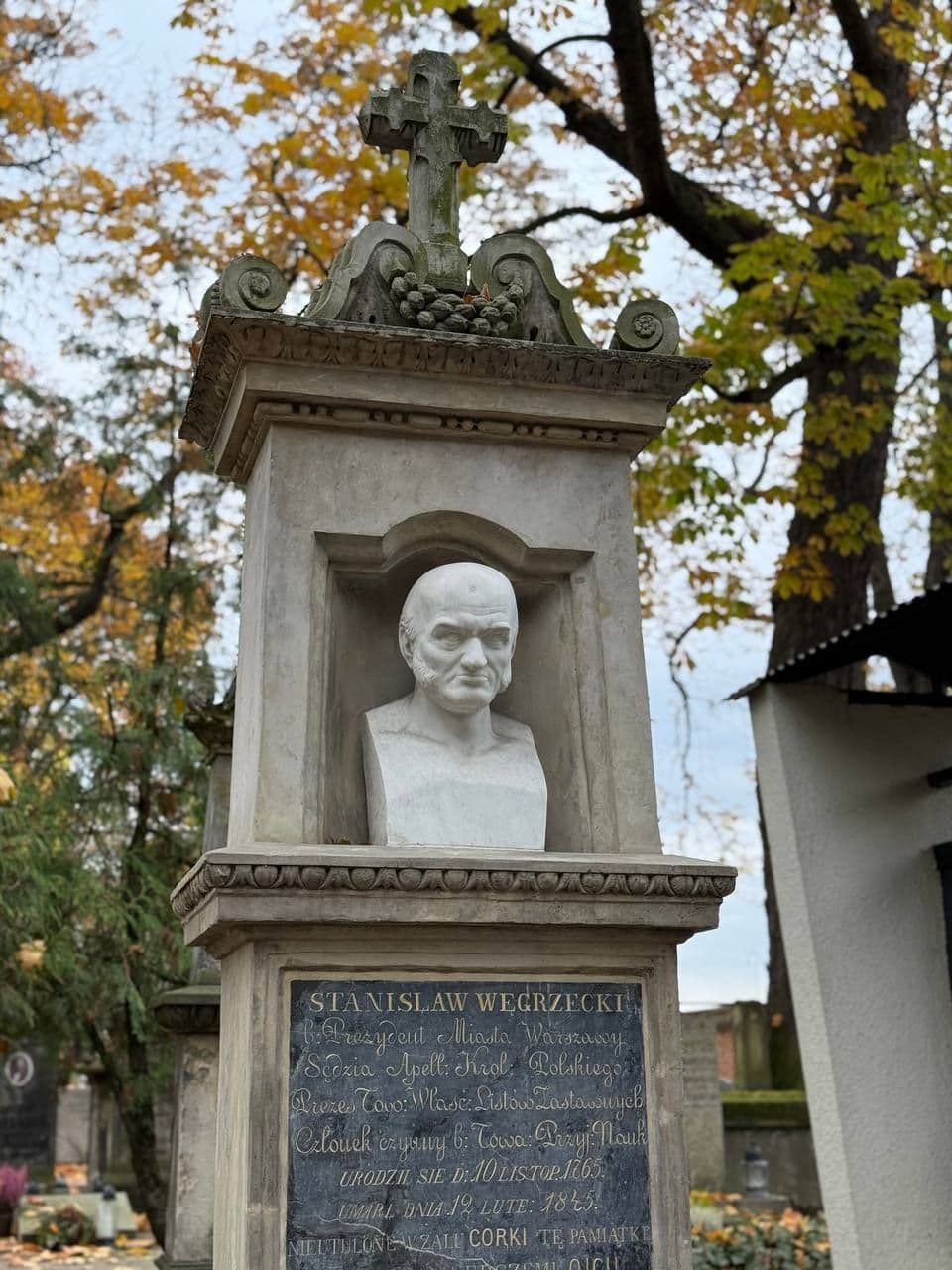

He was born on 10 November 1765 in Warsaw. He belonged to the generation of radical reformers of the Stanisławian era. He was a close associate of Hugo Kołłątaj and was part of the Polish Jacobin movement.
On 29 August 1792, during the Targowica Confederation, he joined it and swore an oath of allegiance, a move that historians interpret as a tactical decision in the political circumstances of the time.
He was a member of the conspiracy that prepared the Kościuszko Uprising and took part in the Warsaw Uprising itself in 1794.
In March 1807, he became deputy mayor of Warsaw, and on 4 July that year he took office as the city's mayor. He held this position until December 1815.
His first term as mayor came at an exceptionally difficult time: Warsaw, the capital of the Duchy of Warsaw, was practically one vast military encampment. The constant passage of Napoleonic troops caused chaos, looting, violence and serious hardship for the civilian population.
Węgrzecki earned the great respect of the residents at that time. Through his energy, determination and personal resolve, he maintained order in the city, curbing the scale of military abuses and organizing the capital's functioning in conditions close to martial law. At the same time, from 1812 to 1815, he served as commandant of the National Guard, further underscoring his role in maintaining public safety. His tenure ended after a conflict with Grand Duke Constantine, who forced him to resign.
After leaving the office of mayor, he became an appellate judge (from 1816), then president of the Commercial Tribunal (from 1817). In 1829, he retired, after which he was elected president of the Committee of Mortgage Bond Holders. On 30 November 1830, in the first days of the November Uprising, he was again appointed mayor of Warsaw. Residents hoped he would draw on his past experience from "wartime". However, Węgrzecki was by then elderly and in poor health, which made it difficult for him to perform his duties effectively. On 26 June 1831, he was removed from office.
Despite his diminished public role, he held important political positions: on 25 January 1831, as a senator-castellan, he signed the act deposing Tsar Nicholas I. Węgrzecki was part of the leading circles of Polish Freemasonry. In 1815, he served as Grand Seal-Bearer of the National Grand Orient of Poland. He was a member of the "Temple of Wisdom" lodge and of National Freemasonry. He also belonged to the Warsaw Society of Friends of Learning, actively participating in the intellectual life of the capital.
He died on 12 February 1845 in Warsaw. He was buried at Powązki Cemetery, in a prominent location by the main gate—a mark of recognition for his service in maintaining the city's order and safety during the Napoleonic Wars. The tombstone was made by the eminent sculptor Jakub Tatarkiewicz, a pupil of Thorvaldsen.