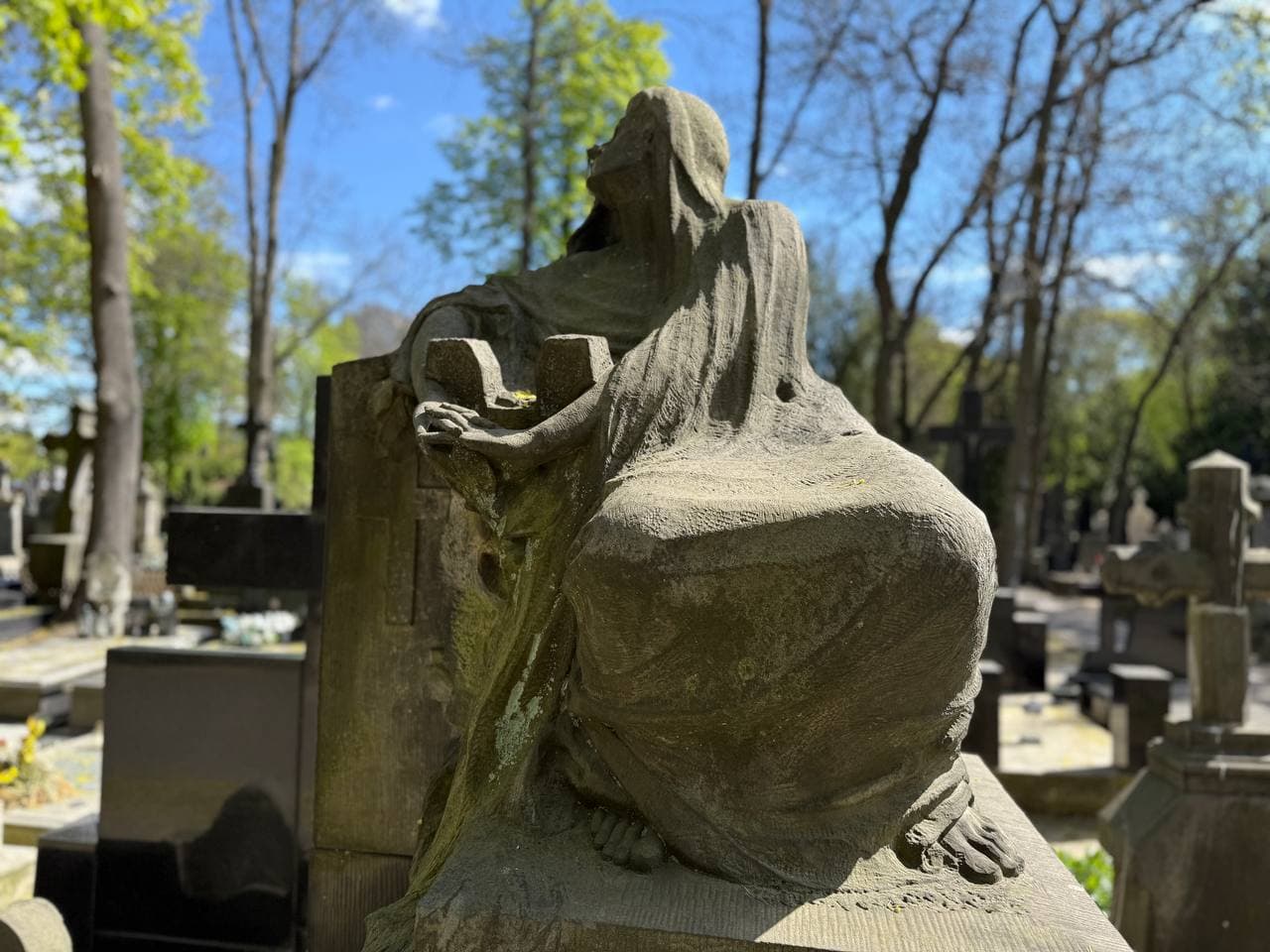

The lyre is one of those funerary symbols that clearly evokes the world of antiquity. Its meaning centers on art, harmony, and the spiritual dimension of human life.
In Greek mythology, the lyre was primarily an attribute of Apollo—the god of light, order, and the arts, as well as the patron of the Muses. It was also associated with Orpheus, the mythical poet and musician whose singing was said to affect people, animals, and even the forces of nature. According to myth, his music could move the inhabitants of the underworld.
From these associations comes the lyre's fundamental meaning as a symbol of art, inspiration, and artistic sensibility. On tombs, it most often points to the deceased's connection with music, poetry, or creative work more broadly.
Harmony of the world and the soul
In the ancient tradition, music was more than an art—it was considered a reflection of cosmic order, the so-called "harmony of the spheres." As a symbol of harmony and proportion, the lyre represented order, balance, and spiritual harmony.
In a funerary context, this meaning is deepened. The lyre may suggest a harmonious, orderly life, lived in accordance with certain values. Death is not presented as chaos, but as a passage into another, more perfect order.
From Orpheus to the biblical tradition
The lyre motif also connects the ancient and biblical traditions. In the Bible, stringed instruments, most often translated as the zither or harp, are associated with King David, the author of the Psalms. In this context, the lyre becomes a symbol of prayer, song, and praise of God.
Although it is not as common a motif as the cross or plant symbols, in Christian art it can represent spiritual harmony and glory expressed through music.
A symbol of artists
In cemeteries—including Old Powązki Cemetery—the lyre appears primarily on the graves of people associated with culture: musicians, poets, and actors. It is a sign of their calling, talent, and contribution to artistic life.
At the same time, it carries a more universal meaning. Music, as an immaterial art, was sometimes seen as especially close to the nature of the soul—invisible, yet more enduring than the body. The lyre can therefore indirectly suggest the permanence of what is spiritual.
An elegant and discreet symbol
Unlike many other funerary motifs, the lyre does not speak directly of death. It does not evoke transience or suffering, but beauty, harmony, and creativity. It reminds us that a person's life can also be understood as a "composition"—left behind for others, though its author has passed away.