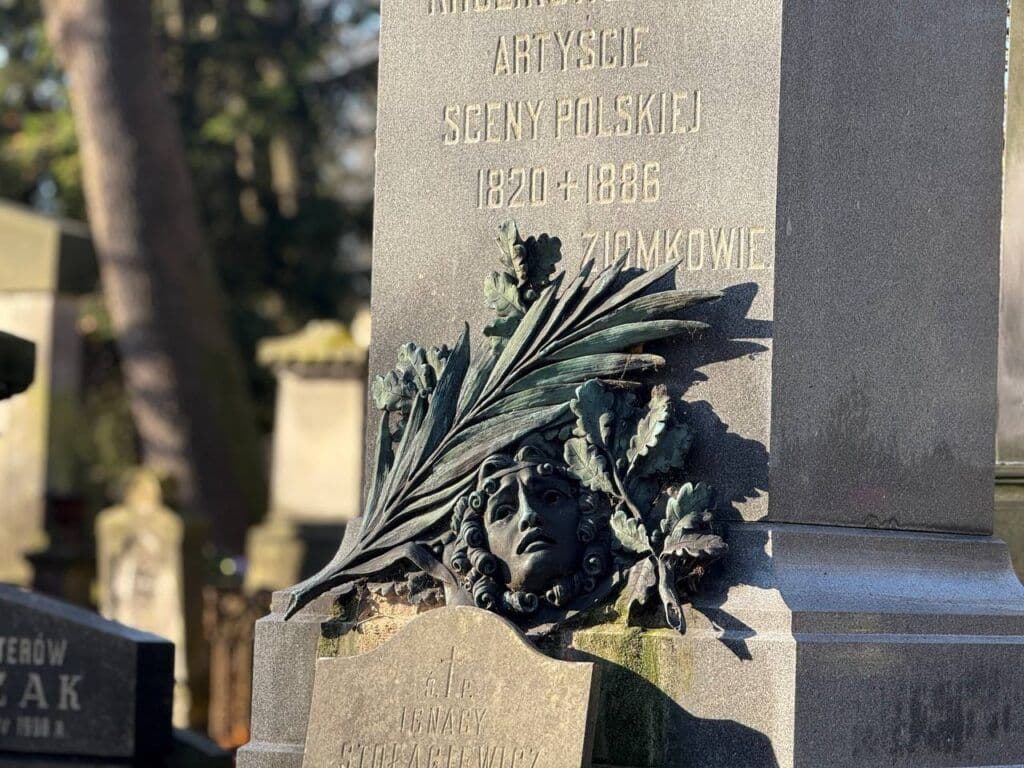

Palm leaf – life and victory
A quotation from Juliusz Słowacki's "Letter to the Bookseller" could be the starting point for a hefty collection of fragments of poetry and prose in which the palm appears. An album of its depictions in painting, graphic art and sculpture would run to at least a dozen volumes. The most popular tree in the Mediterranean basin symbolised life and victory. Victory over oneself, too, for every victor during his triumph—that is, the ceremonial procession marking his achievements—had a slave walking behind him, repeating: Hominem te esse memento – remember that you are human. The Bible is an exceedingly rich source preserving this image, with its accounts of two processions accompanied by cheering crowds who scattered palm branches: that of Judas Maccabeus after defeating the Syrians, and that of Christ before his Passion and Resurrection. From then on, the palm began to appear in catacombs, in depictions of martyrs, and became an attribute of many saints, illustrating a passage from Psalm 92:
_"Like the palm and the cedars of Lebanon,
The virtuous stock flourishes, planted
In the Lord's delightful palace,
Ever blooming, ever green,
Vigorous and fruitful even in old age."_
The palm bent down helpfully during the Flight into Egypt, and it is part of the iconography of the Dormition of the Blessed Virgin Mary; it also appears in the Litany of Loreto.