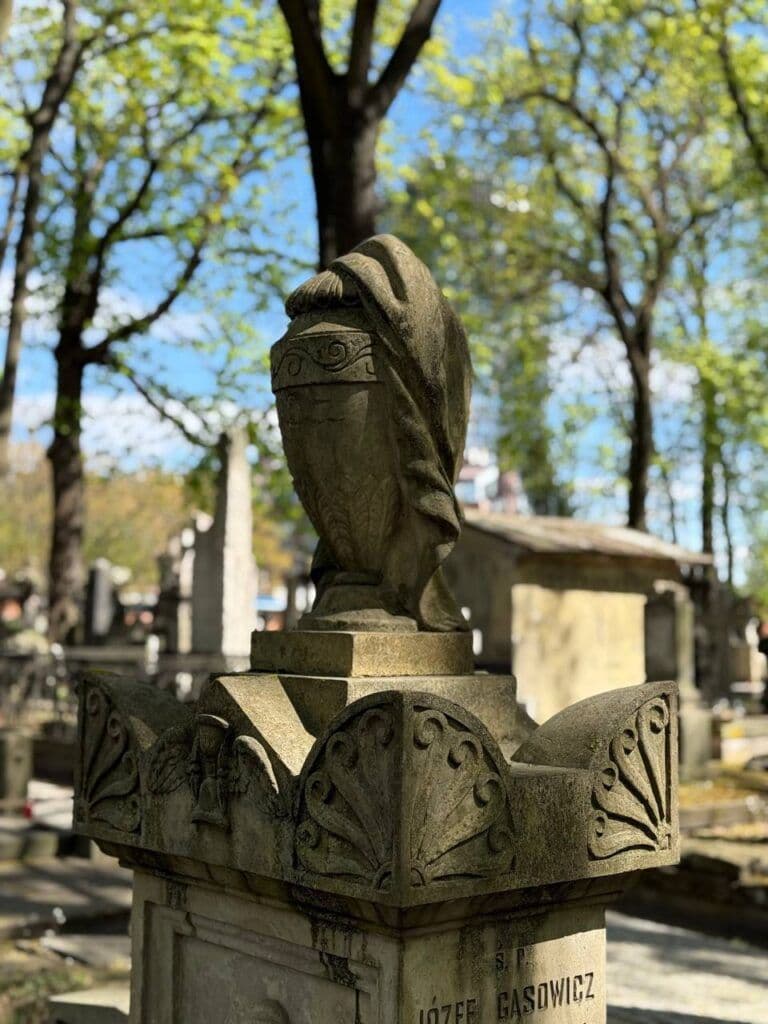

Urn – remembrance and mourning
The urn is one of the oldest, yet also one of the most multifaceted symbols in sepulchral art. It is also one of the oldest objects associated with funeral rites. It was used as early as prehistoric times, when the remains of the deceased left after cremation were placed in urns. For people of the past, these served as a new body, a new vessel for the deceased.
Exceptional face urns have been found in the northern part of Poland. Their upper sections simply depicted a human face, most likely representing the deceased, while the lower sections were decorated with various scenes – of hunting or funeral rites.
In antiquity, urns continued to serve their original purpose, while becoming increasingly ornate.
This changed with the advent of Christianity and the abandonment of cremation burials. The urn disappeared for a time, only to return in the Neoclassical era, along with a fascination with antiquity. This time, however, it served primarily a decorative and symbolic function, becoming a sign of remembrance, mourning and the passage of time.
In the 19th century, the urn was a very popular funerary motif. It appeared in many variations and with various additions – a flame, mourning drapery, ivy or an ouroboros. Each version had its own symbolism. An urn entwined with ivy signified eternal love and remembrance that death cannot break. The ouroboros symbolised eternity and infinity, while the flame represented the immortality of the soul and undying remembrance.
Today, the urn is making a return with the growing popularity of cremation and the construction of an increasing number of columbaria. However, it is no longer primarily a motif in sepulchral art, but once again an object for practical use. It could therefore be said that, in a sense, we are returning to the customs of our ancestors.