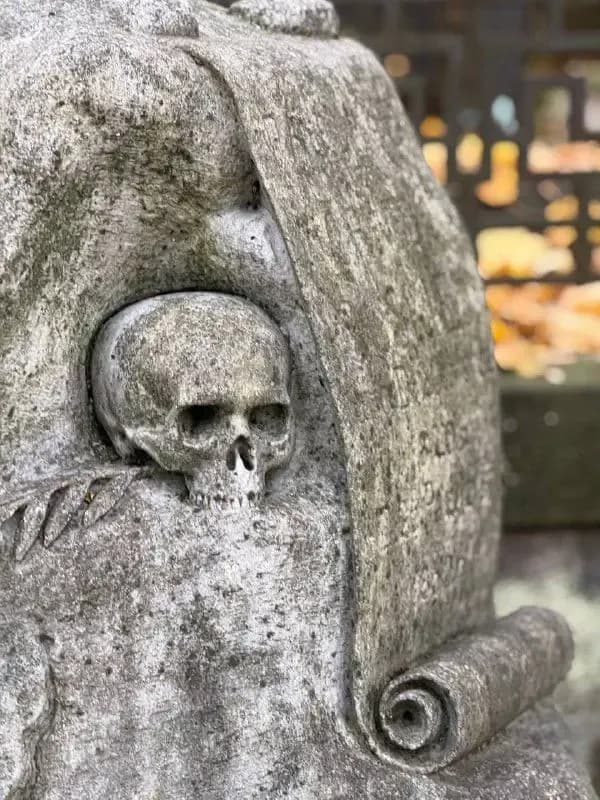
The skull – a symbol of death and transience
The skull is one of the most distinctive motifs found in funerary art. For centuries, it has served as a reminder of the inevitability of death, the fragility of human life and the transience of worldly possessions. It is one of the most important elements of the symbolism of memento mori and vanitas, prompting reflection on the human condition.
In the Christian tradition, the skull also acquired a particular religious significance. According to ancient tradition, Golgotha, whose name means "Place of the Skull", was the burial place of Adam. This belief was given lasting currency by, among others, Origen, a theologian from Alexandria.
From the 9th century onwards, the skull was depicted beneath the cross in scenes of the Crucifixion. It symbolised the victory of Christ, known as the New Adam, over sin and death.
The skull also appeared as an attribute of saints, including St Mary Magdalene, St Francis and St Charles Borromeo.
The skull in funerary art – from the Renaissance to the 19th century
Over the centuries, the skull motif appeared in a variety of artistic compositions.
Particularly interesting examples are depictions of putti with skulls, found in Polish Renaissance and Mannerist tomb sculpture for children. These show a small child, sometimes asleep or resting on a skull. The contrast between the young body and human remains emphasised the fragility of life and served as a reminder that death can strike at any age.
In the 19th century, as Classicism, Romanticism and Historicism developed, cemetery symbolism gradually changed. Depictions of angels, mourners, weeping women, urns, wreaths, broken columns and extinguished torches became increasingly prominent.
Funerary art increasingly focused on commemorating the deceased as an individual, expressing the grief of loved ones and conveying hope of a reunion.
This did not mean that the skull motif disappeared entirely. Its significance, however, depended on the period, the character of the tomb, the sculptor's workshop and the artistic composition as a whole.
The virtual dictionary of symbols at Stare Powązki – discovering more historic monuments
The Stare Powązki Foundation is steadily expanding its project to digitise historic tombs and promote their symbolism.
Making another entry available in our virtual dictionary of symbols offers yet another opportunity to discover the richness of the funerary art of Stare Powązki.
Thanks to modern technology, visitors to our website can view digitised historic monuments, examine sculptural details and learn about their historical, artistic and symbolic significance.
Each new object made available helps us better understand how much funerary art reveals about past beliefs, customs and ways of commemorating the dead.
We invite you to view another historic monument and discover the symbolism of the skull in our virtual dictionary of symbols:
👉
Join a free guided tour of Stare Powązki
Discovering Stare Powązki need not be limited to the virtual world.
The Stare Powązki Foundation also invites you to discover in person the history and cultural heritage of one of Poland's most important historic cemeteries.
As part of our educational projects, we organise free activities and guided walks around Stare Powązki with licensed guides.
During these visits, participants learn about the cemetery's history, the lives of those buried there, the history of architecture and funerary art, and the significance of the symbols that adorn its historic monuments.
Our activities are intended for a wide range of audiences, including schoolchildren and young people, families, older adults, and anyone interested in history, art and cultural heritage.
Participation is free of charge.
You can make a reservation through our online booking system:
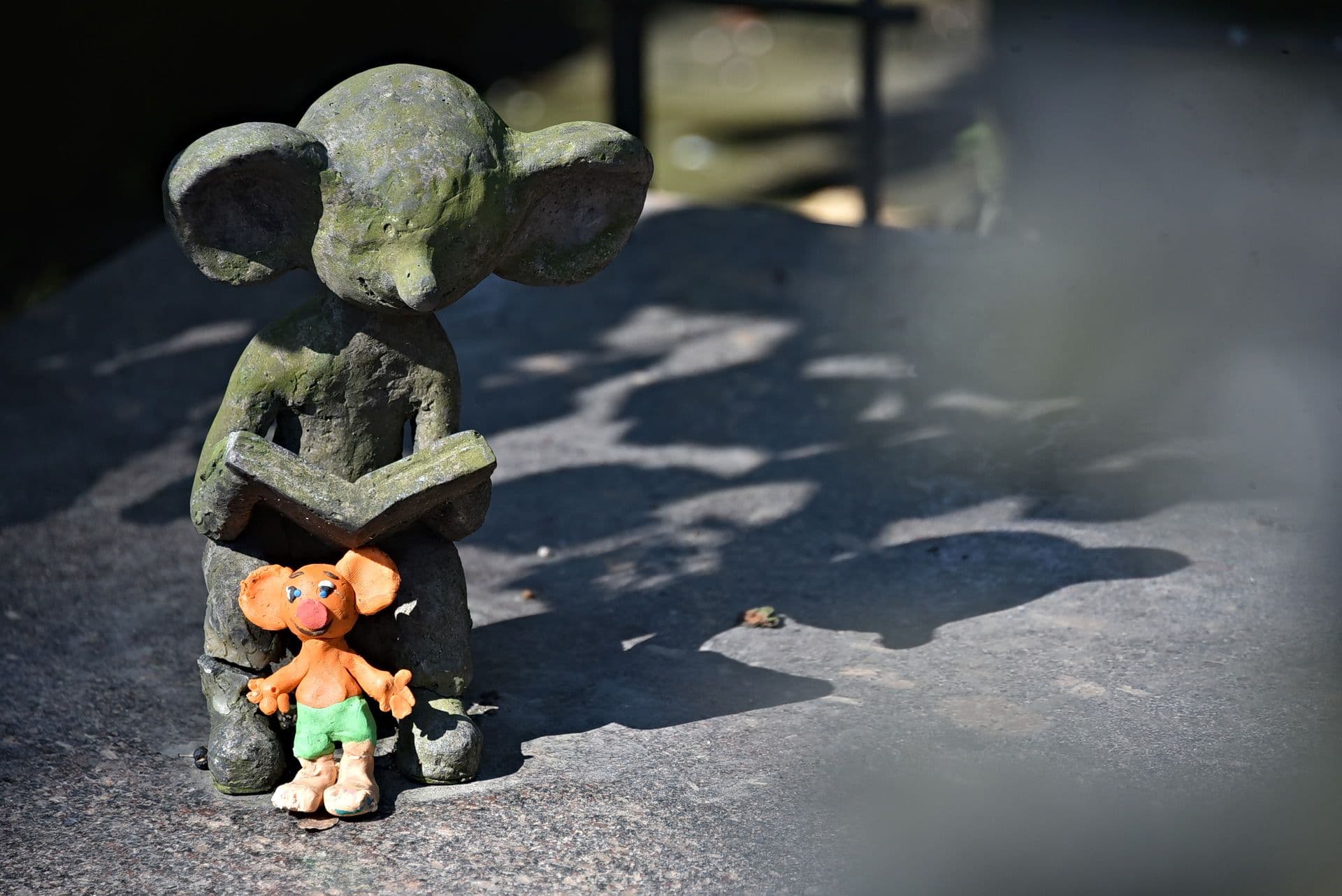
Rezerwacja lekcji z przewodnikiem
na Starych Powązkach
https://edukacja.stare-powazki.pl/pl/rezerwacja

We warmly invite you to discover Stare Powązki, both in the virtual world and on a walk along the cemetery's historic avenues.
The educational projects of the Stare Powązki Foundation are supported by:
PFR Foundation, ORLEN Foundation, Industrial Development Agency Foundation, Bank Pekao S.A. Foundation, PKP Group Foundation, Budimex SA, PZU Foundation – Help Is Our Strength – PZU's social responsibility programme, and PGE Foundation – PGE Energy of Science.